Table of Contents
During Sea Asia, a visitor stopped by our booth and asked me something that made me pause:
“You talk about digital twins—everyone here talks about digital twins—but honestly, what exactly are they? I’m totally confused.”
It made me realize he’s not alone. Digital twins have become one of those buzzwords tossed around so much that people have lost track of what they really mean. So, I thought it would be useful to step back and clearly explain digital twins—especially how they apply practically to offshore operations.
So, What Exactly Is a Digital Twin?
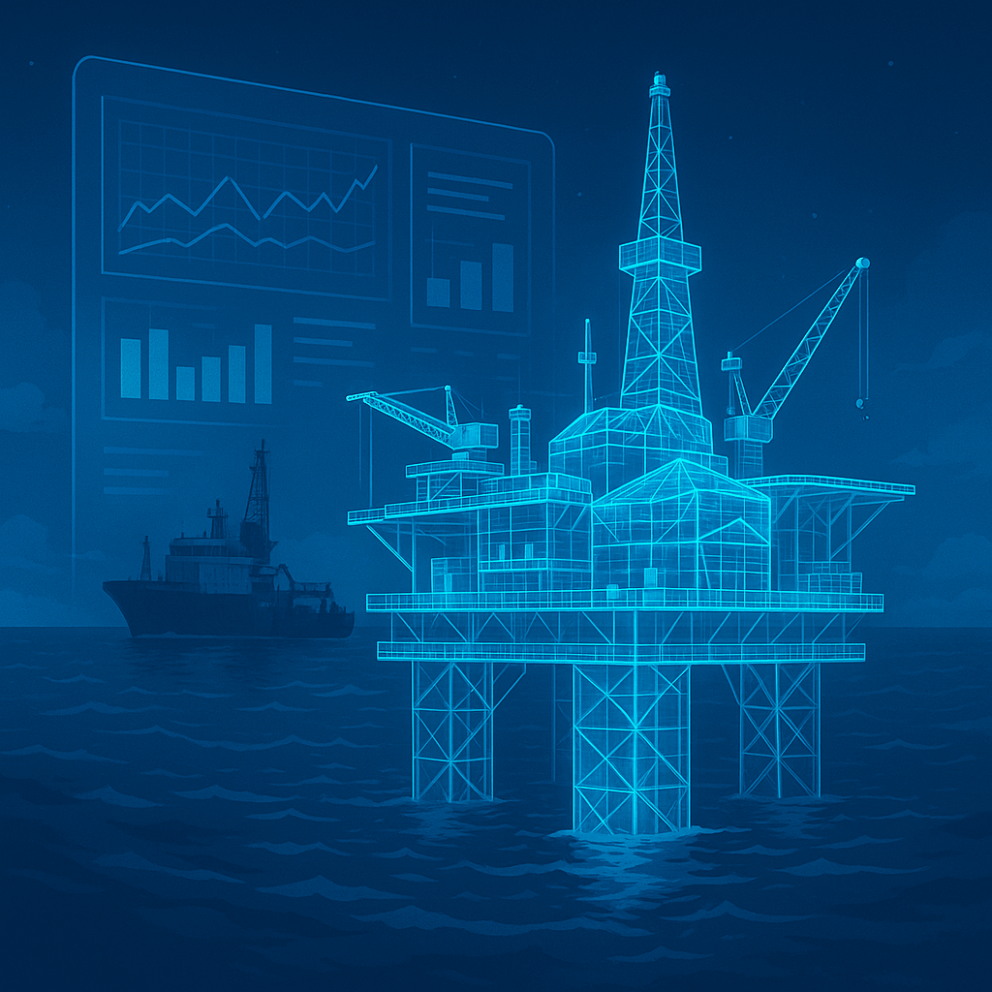
Simply put, a digital twin is a live, digital version of a physical piece of equipment, system, or process. It continuously updates using real-time data, mirroring exactly what’s happening in the real world. For example, if your ship’s engine is running at 2,250 RPM and 87°C, you’ll see these exact numbers reflected in your digital twin.
But digital twins aren’t just fancy dashboards. They combine real-time sensor data, historical information, and smart algorithms to predict how equipment might behave under different scenarios. This lets engineers test “what if” situations virtually, avoiding costly downtime and boosting safety.
You might be surprised to hear digital twins aren’t a new idea—NASA used something similar back in the Apollo missions. Now, thanks to advancements in sensors, data analytics, and computing power, digital twins are becoming a critical tool in the offshore and maritime sectors.
What Does a Digital Twin Actually Look Like?
A digital twin can take various forms. It could be a detailed 3D model or a virtual tour, an interactive dashboard, or even just an algorithm-driven data set. There’s no strict definition or boundary—what matters most is that it’s a real-time, accurate reflection of the real world.
Even at the basic level, building a digital twin—like a live feed of critical drilling data—is not necessarily simple. In offshore drilling, for instance, collecting and interpreting data around the drill bit is incredibly complex and expensive. Companies spend millions just to achieve what many consider a “basic” digital twin.
For ship designers, creating a digital twin might mean building detailed models that factor in structural stress, hydrodynamics, and materials, often taking weeks or months. But in everyday offshore operations, the focus is usually simpler: gathering real-time data from engines, pumps, cranes, and environmental conditions like weather and sea states. Combined with event logs, this information creates a clear, understandable picture of what’s happening onboard.
Why Should Offshore Operators Care?
Imagine a simple, live dashboard showing the health and status of all your critical onboard equipment. You can immediately spot when something isn’t right, like unusual fuel use or a hydraulic problem developing in a crane. You can even run virtual emergency drills to see how your crew and equipment might respond—all without risking actual downtime.
In short, digital twins make complicated offshore operations clearer and easier to manage. They help predict and avoid problems, make your operations safer, and lead to quicker, smarter decisions.
Real-World Offshore Use Cases

Offshore vessels like supply ships, AHTS, crew boats, even FPSOs or construction vessels are perfect examples of complex systems that benefit from digital twins:
- Engines and Propulsion Systems: Digital twins monitor your engines in real time, helping predict problems like unusual vibrations or temperature spikes. This means maintenance can be planned at convenient times instead of reacting to sudden breakdowns. Plus, by monitoring fuel use, digital twins can suggest ways to improve efficiency—saving money and reducing emissions.
- Operational Performance: Offshore operations are unique and involve multiple short voyages or tasks within a single day, making it challenging to determine if specific operations are efficient. Digital twins help by providing detailed, granular data that allows operators to accurately assess performance during these short intervals. By clearly identifying operational bottlenecks, teams can make targeted improvements rather than relying on vague daily averages. Additionally, 3D models and virtual environments integrated with simulated or real-time data can significantly enhance crew training. They help teams prepare for various scenarios and improve their efficiency in challenging operational conditions.
Digital Twins on Offshore Rigs
Offshore rigs are essentially floating factories, and digital twins bring huge benefits here too:
- Drilling Operations: Digital twins can predict equipment wear and maintenance needs, helping avoid costly downtime. They also simulate the drilling process, helping operators anticipate and avoid potential problems like stuck pipes or high-pressure pockets.
- Safety and Environmental Monitoring: Digital twins integrate safety data from across the rig, giving you real-time insight into potential hazards. They simulate emergency scenarios, helping refine safety plans and training. Crew members can rehearse emergency responses virtually, significantly improving their preparedness.
- Environmental Efficiency: Digital twins help optimize processes to reduce environmental impact, like minimizing flaring and fuel use, and ensuring compliance with new regulations.
Getting Started with Digital Twins
You don’t need to implement digital twins across your entire operation overnight. Here are some practical steps to begin:
- Pick Critical Areas: Start with a high-value asset that’s critical to operations and prone to problems. Digitize it, track its performance, and demonstrate immediate value. At Perfomax, we offer fast-to-deploy solutions—digitizing an engine can take less than four hours, quickly demonstrating the benefits of condition monitoring/maintenance prediction or just simple fuel monitoring.
- Use Existing Data: You probably already have useful data stored in your SCADA systems or logs. Start by leveraging these resources. Perfomax systems integrate smoothly with existing data infrastructure, eliminating the need for costly new installations.
- Training and Simulation: Even partial digital twins can be valuable in training your crew. Use real scenarios to train your staff safely, building familiarity and skills effectively. Importantly, using 3D models and virtual environments for training no longer means significant costs; typically, setting up such solutions averages around 20,000 USD.
- Refine and Grow Gradually: Start small, gather feedback, and gradually integrate more assets into your digital twin system. As confidence builds, you’ll find it easier to justify further expansions.
Final Thoughts
Digital twins aren’t futuristic anymore—they’re practical tools that offshore operators are using today to significantly improve safety, efficiency, and decision-making. At Perfomax, we understand the offshore industry’s unique demands and pressures. Our solutions are straightforward, quick to deploy, and tailored specifically for offshore conditions.
We’re here to help at every step of your digital twin journey. If you’d like to get a free consultation from our experts, reach out at hello@perfomax.io—we’d love to hear from you.
Discover more from PerfoMax
Subscribe to get the latest posts sent to your email.